
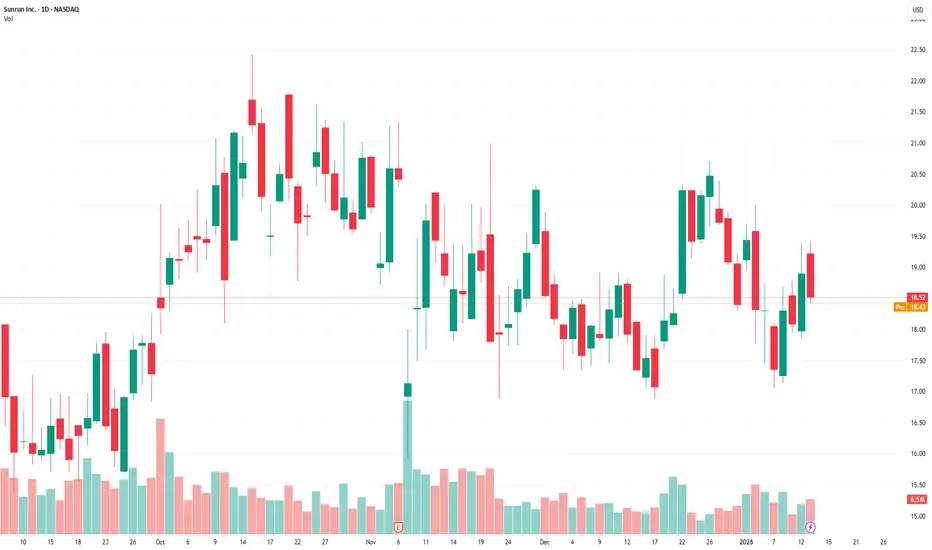
Sunrun (RUN) is the largest company in the U.S. residential solar systems market. It installs home solar panels and batteries under a “solar-as-a-service” model—customers enter into long-term leases or power purchase agreements (PPAs) instead of making a one-time equipment purchase. This approach lowers upfront costs for consumers switching to solar energy, while Sunrun generates the bulk of its revenue from recurring subscription payments and by monetizing renewable energy–related tax incentives. The company serves more than 1 million customers and operates in most key U.S. states. Together with the expansion of its product lineup (home batteries and energy management systems), this scale strengthens its leadership in the residential renewable energy segment.
Investment attractiveness factors
Market leadership and share growth
Sunrun holds approximately 20% of the U.S. market for new residential solar installations and about 40% of the home energy storage segment. The company significantly outpaces competitors due to its scale and leasing model: more than 95% of Sunrun’s sales come from subscriptions (about one-third of the entire subscription market). This strategy allows the company to directly benefit from tax incentives and offer customers a low barrier to entry—especially important amid rising interest rates. At the same time, several competitors have exited the market: in 2024–2025, major industry players (including SunPower and Sunnova) filed for bankruptcy, creating additional opportunities for Sunrun to capture displaced demand.
Rapid growth in energy storage
Sunrun is actively expanding its presence in the home battery segment. In Q3 2025, around 70% of new customers opted to add energy storage systems (up from ~60% a year earlier), and the company accounted for 42% of all new residential storage installations in the U.S. in Q2 2025. Through its “storage-first” strategy, Sunrun increases average revenue per customer and protects margins: additional storage services help offset less favorable net metering tariffs and create new revenue streams. More than 100,000 customers are already enrolled in virtual power plant (VPP) programs—a network of home batteries that sells energy back to the grid during peak demand—with participation growing by over 400% year over year. The development of this business not only drives battery sales but also turns stored solar energy into a commercial product, reinforcing Sunrun’s competitive advantage.
External drivers and partnerships
The macro environment and government support are favorable for the company. The Inflation Reduction Act (IRA, 2022) extended the 30% federal tax credit for residential solar installations through 2032, preserving long-term incentives for households to adopt solar energy. At the same time, rising electricity rates and more frequent power outages increase the appeal of home solar-plus-storage systems as a means of cost savings and backup power. Sunrun is also strengthening its position through technological advantages and partnerships: the company invests in software for managing distributed generation, collaborates with utilities and automakers (for example, integrating Ford F-150 Lightning electric vehicles into home energy systems), and works with major homebuilders to install solar panels in new homes. These factors support Sunrun’s sustainable business growth, enhancing revenue potential and return on invested capital.
Target price: $23.
Investment attractiveness factors
Market leadership and share growth
Sunrun holds approximately 20% of the U.S. market for new residential solar installations and about 40% of the home energy storage segment. The company significantly outpaces competitors due to its scale and leasing model: more than 95% of Sunrun’s sales come from subscriptions (about one-third of the entire subscription market). This strategy allows the company to directly benefit from tax incentives and offer customers a low barrier to entry—especially important amid rising interest rates. At the same time, several competitors have exited the market: in 2024–2025, major industry players (including SunPower and Sunnova) filed for bankruptcy, creating additional opportunities for Sunrun to capture displaced demand.
Rapid growth in energy storage
Sunrun is actively expanding its presence in the home battery segment. In Q3 2025, around 70% of new customers opted to add energy storage systems (up from ~60% a year earlier), and the company accounted for 42% of all new residential storage installations in the U.S. in Q2 2025. Through its “storage-first” strategy, Sunrun increases average revenue per customer and protects margins: additional storage services help offset less favorable net metering tariffs and create new revenue streams. More than 100,000 customers are already enrolled in virtual power plant (VPP) programs—a network of home batteries that sells energy back to the grid during peak demand—with participation growing by over 400% year over year. The development of this business not only drives battery sales but also turns stored solar energy into a commercial product, reinforcing Sunrun’s competitive advantage.
External drivers and partnerships
The macro environment and government support are favorable for the company. The Inflation Reduction Act (IRA, 2022) extended the 30% federal tax credit for residential solar installations through 2032, preserving long-term incentives for households to adopt solar energy. At the same time, rising electricity rates and more frequent power outages increase the appeal of home solar-plus-storage systems as a means of cost savings and backup power. Sunrun is also strengthening its position through technological advantages and partnerships: the company invests in software for managing distributed generation, collaborates with utilities and automakers (for example, integrating Ford F-150 Lightning electric vehicles into home energy systems), and works with major homebuilders to install solar panels in new homes. These factors support Sunrun’s sustainable business growth, enhancing revenue potential and return on invested capital.
Target price: $23.

Aviso legal
As informações e publicações não se destinam a ser, e não constituem, conselhos ou recomendações financeiras, de investimento, comerciais ou de outro tipo fornecidos ou endossados pela TradingView. Leia mais nos Termos de Uso.
Aviso legal
As informações e publicações não se destinam a ser, e não constituem, conselhos ou recomendações financeiras, de investimento, comerciais ou de outro tipo fornecidos ou endossados pela TradingView. Leia mais nos Termos de Uso.