
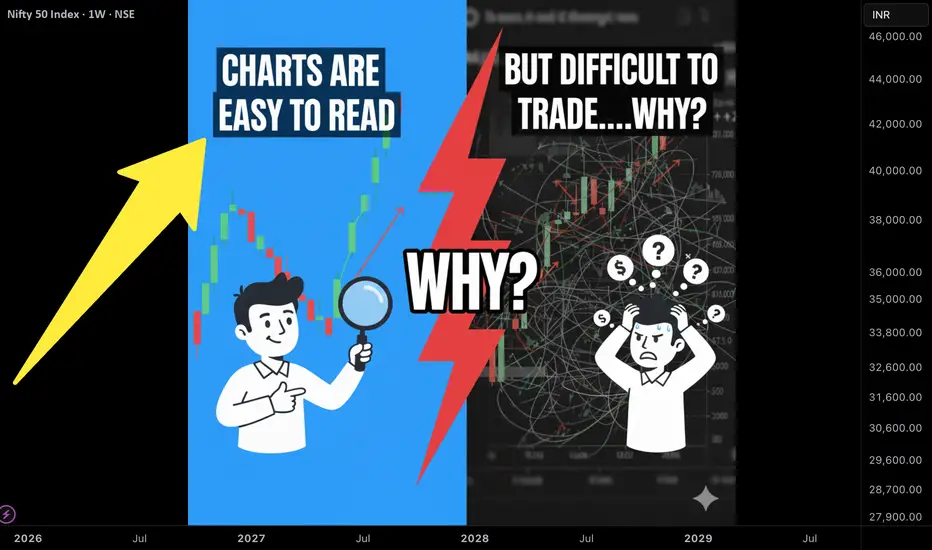
Why Chart Reading is Easy, Trading is Hard
Reading a chart is an intellectual activity.
Trading is an emotional activity.
When you're reading a chart, you're using the prefrontal cortex — the rational part of your brain responsible for calculation, logic, pattern recognition. Here, you're objective. You see the trend clearly. You think, “If price breaks this level, I’ll buy. If it fails, I’ll exit.”
But when money is on the line, another part of your brain takes control — the amygdala.
---
The Amygdala: The Trader's Hidden Enemy
The amygdala is the ancient survival system of the brain. It helped humans run from tigers, stay alert to threats, and survive danger.
To the amygdala, losing money = threat to survival.
So when price goes slightly against you, even if it’s normal market noise, the amygdala screams:
• EXIT! YOU’RE IN DANGER!
• WHAT IF IT CRASHES?
• WHAT IF YOU LOSE EVERYTHING?
Suddenly, the same breakout you trusted now looks like a bull trap.
A healthy pullback looks like a reversal.
A small red candle feels like the start of a collapse.
You don’t see the chart anymore.
You see fear.
The brain starts creating patterns that don’t exist — just like seeing shapes in clouds. That’s why traders cut winners early, hold losers too long, chase entries, hesitate to click buy, and exit at the worst time.
This is not lack of knowledge.
This is biology.
---
Junk Food and Trading: The Same Battlefield
Think of junk food.
Most people know it’s unhealthy. They know what to eat and what to avoid. They can explain calories, fat, insulin spikes — they’re logical about it.
But late at night, when emotions rise, cravings hit.
A samosa, burger, or chips suddenly look irresistible.
Thoughts change like this:
Before:
"I shouldn't eat junk."
During craving:
"One bite won't harm."
"I’ll start eating clean tomorrow."
"I worked hard today — I deserve this."
This is the same brain mechanism.
• Rational brain knows the correct decision
• Amygdala creates justification to satisfy emotion
Charts work the same way.
When you don’t have skin in the game, you’re rational.
When you're holding a live trade, your amygdala creates excuses, fears, hope — stories that blind you.
You begin to see a bullish chart as bearish, or see reversal even when it doesn’t exist. Just like junk food — you convince yourself into the wrong decision.
Not because you're stupid.
Because you're human.
---
So How Do You Beat This?
You don’t fix it by reading more books or analyzing more charts.
You fix it by training your emotional system, not just your analytical one.
Professional traders aren’t better at reading charts — they're better at managing what their mind does after entering a chart.
The goal is not to eliminate emotions.
The goal is to act despite them.
---
Final Thought
Charts are easy to read.
But trading them requires you to fight the most ancient part of your biology.
When logic meets money,
the market is no longer outside —
the real market is inside your brain.
Win there, and price will follow.
Reading a chart is an intellectual activity.
Trading is an emotional activity.
When you're reading a chart, you're using the prefrontal cortex — the rational part of your brain responsible for calculation, logic, pattern recognition. Here, you're objective. You see the trend clearly. You think, “If price breaks this level, I’ll buy. If it fails, I’ll exit.”
But when money is on the line, another part of your brain takes control — the amygdala.
---
The Amygdala: The Trader's Hidden Enemy
The amygdala is the ancient survival system of the brain. It helped humans run from tigers, stay alert to threats, and survive danger.
To the amygdala, losing money = threat to survival.
So when price goes slightly against you, even if it’s normal market noise, the amygdala screams:
• EXIT! YOU’RE IN DANGER!
• WHAT IF IT CRASHES?
• WHAT IF YOU LOSE EVERYTHING?
Suddenly, the same breakout you trusted now looks like a bull trap.
A healthy pullback looks like a reversal.
A small red candle feels like the start of a collapse.
You don’t see the chart anymore.
You see fear.
The brain starts creating patterns that don’t exist — just like seeing shapes in clouds. That’s why traders cut winners early, hold losers too long, chase entries, hesitate to click buy, and exit at the worst time.
This is not lack of knowledge.
This is biology.
---
Junk Food and Trading: The Same Battlefield
Think of junk food.
Most people know it’s unhealthy. They know what to eat and what to avoid. They can explain calories, fat, insulin spikes — they’re logical about it.
But late at night, when emotions rise, cravings hit.
A samosa, burger, or chips suddenly look irresistible.
Thoughts change like this:
Before:
"I shouldn't eat junk."
During craving:
"One bite won't harm."
"I’ll start eating clean tomorrow."
"I worked hard today — I deserve this."
This is the same brain mechanism.
• Rational brain knows the correct decision
• Amygdala creates justification to satisfy emotion
Charts work the same way.
When you don’t have skin in the game, you’re rational.
When you're holding a live trade, your amygdala creates excuses, fears, hope — stories that blind you.
You begin to see a bullish chart as bearish, or see reversal even when it doesn’t exist. Just like junk food — you convince yourself into the wrong decision.
Not because you're stupid.
Because you're human.
---
So How Do You Beat This?
You don’t fix it by reading more books or analyzing more charts.
You fix it by training your emotional system, not just your analytical one.
Professional traders aren’t better at reading charts — they're better at managing what their mind does after entering a chart.
The goal is not to eliminate emotions.
The goal is to act despite them.
---
Final Thought
Charts are easy to read.
But trading them requires you to fight the most ancient part of your biology.
When logic meets money,
the market is no longer outside —
the real market is inside your brain.
Win there, and price will follow.

Aviso legal
As informações e publicações não se destinam a ser, e não constituem, conselhos ou recomendações financeiras, de investimento, comerciais ou de outro tipo fornecidos ou endossados pela TradingView. Leia mais nos Termos de Uso.
Aviso legal
As informações e publicações não se destinam a ser, e não constituem, conselhos ou recomendações financeiras, de investimento, comerciais ou de outro tipo fornecidos ou endossados pela TradingView. Leia mais nos Termos de Uso.